
Mosque: What It Is, What Happens Inside, and How to Visit One
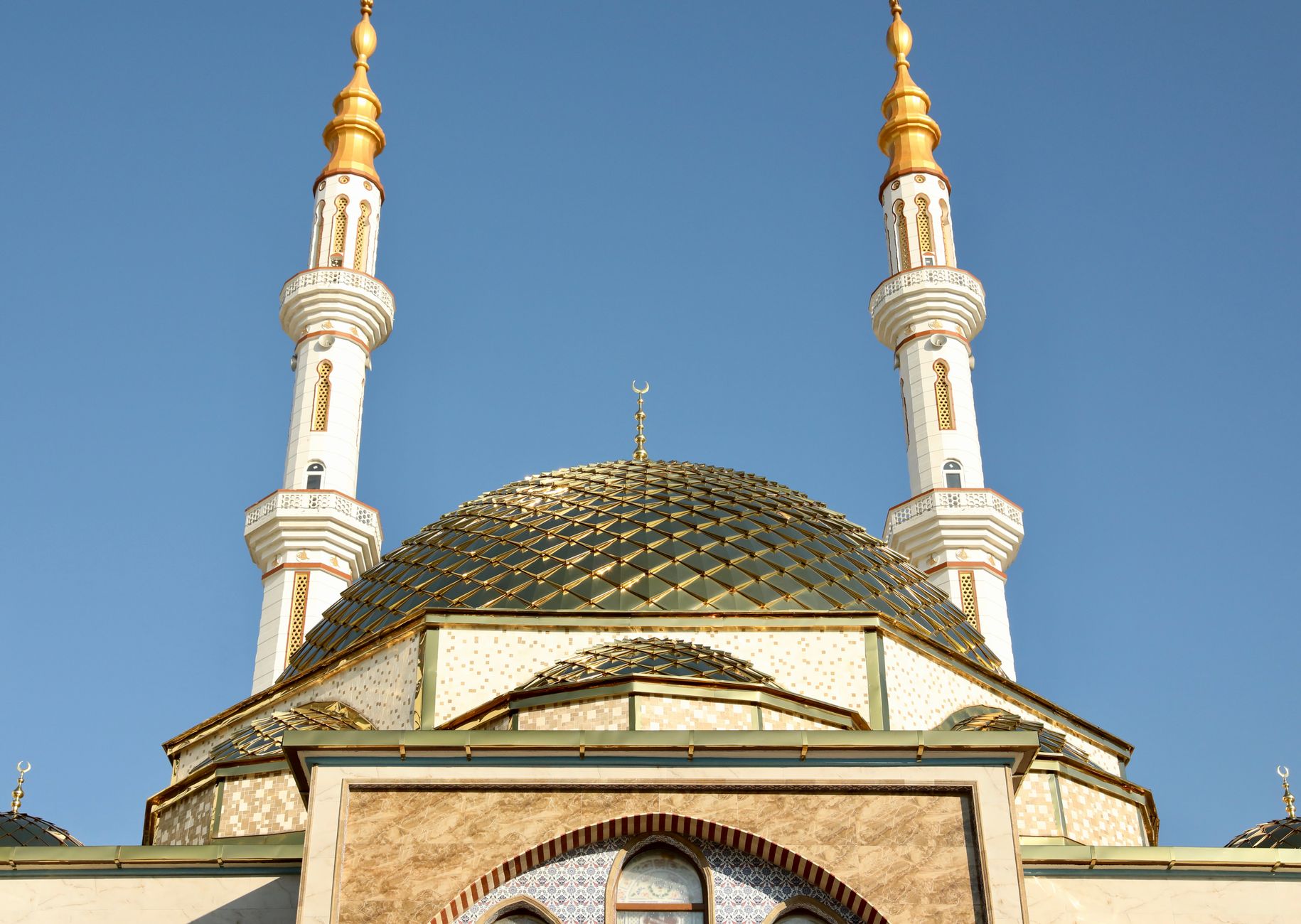
A mosque is a Muslim place of worship, the building where the five daily prayers and the Friday congregational prayer are performed together. The quickest way to find one near you is to search MosqueIndex by state or city, a directory of 3,442 mosques across all 50 states, Washington DC, and Puerto Rico, with the address, a map, and today's calculated prayer times on every listing.
Mosques vary enormously, from a converted storefront with one carpeted room to a purpose-built complex with a dome, minarets, and a weekend school. This guide covers what they have in common, what happens inside during a normal week, and what to expect on a first visit.
What makes a building a mosque
What makes a space a mosque is not its architecture but its orientation: one wall faces Mecca, and the congregation lines up facing it to pray. Everything else is variation.
That wall is the qibla wall, and set into it is a mihrab, described in Smarthistory's introduction to mosque architecture as a niche in the wall indicating the direction of Mecca, toward which all Muslims pray. To work that direction out yourself, see our guide to finding the qibla.
Beyond the qibla wall, these are the features you are most likely to see:
- Musalla (prayer hall). An open carpeted floor with no pews, marked with lines so worshippers form even rows. Decoration is geometry and calligraphy rather than images of people or animals.
- Minbar. A short raised staircase beside the mihrab, used by the imam when delivering the Friday sermon.
- Minaret. The same reference describes a minaret as a tower attached or adjacent to a mosque, from which the call to prayer is announced. In the US the call is usually given indoors, so many American mosques have none.
- Wudu area. A washing room with low taps and benches for the ablution performed before prayer. Our step-by-step wudu guide covers the sequence.
- Shoe racks. Shoes come off before the carpet, so there is a rack at the entrance.
- A women's prayer area. Arrangements differ by mosque, from a shared hall to a separate room or balcony. See women's prayer spaces at mosques.
A dome, courtyard, and minaret are what people picture, but none are required. Many US mosques occupy former churches, offices, or retail units.
What happens inside a mosque during the week
Five short congregational prayers spread across the day, plus one large gathering on Friday.
The daily prayers are Fajr before sunrise, Dhuhr after midday, Asr in the afternoon, Maghrib just after sunset, and Isha at night. Each takes only a few minutes. The congregation gathers at the iqama, the call that starts group prayer, which each mosque sets a fixed number of minutes after the calculated time so people can arrive.
Friday is different. Jummah replaces Dhuhr once a week and adds a khutbah (sermon) from the minbar. It is the busiest hour of the week, and larger mosques run two or three back-to-back sessions. Start times are set by each mosque, commonly between 1:00 and 2:00 in the afternoon.
Every MosqueIndex listing shows today's five times computed for that mosque's own coordinates and timezone using the ISNA method. The Fiqh Council of North America suggests 15 degrees for both Fajr and Isha in this region and notes that this corresponds to the "Islamic Society of North America" setting in most prayer apps. Our methodology page documents the calculation, and the five daily prayers explained covers each one.
Treat any calculated time as a planning estimate, not a guarantee. Iqama and Jummah times are set by the mosque and reach us through community submissions, so we label them confirmed or not yet confirmed rather than guessing. Call before relying on a Friday time.
Outside prayer, most mosques run a community calendar: weekend Quran classes, taraweeh and iftars through Ramadan, funerals, marriages, and food pantries.
Can non-Muslims visit a mosque?
Yes. Visitors of any faith or none are welcome at the great majority of American mosques, and many actively invite them. The US Council of Muslim Organizations runs Open Mosque Day, which it describes as an event where mosques across the country open their doors to the wider community, inviting people of all faiths and backgrounds to explore and learn about Islam.
A few courtesies cover almost every visit:
- Dress modestly. Long sleeves and long trousers or a skirt, and a headscarf for women. Our dress code guide has the details, and many mosques keep spare scarves at the door.
- Take your shoes off at the rack before stepping onto the carpet.
- Silence your phone, keep your voice low, and leave food and drink outside.
- Do not walk in front of someone who is praying. Step behind them instead.
- Ask before photographing anyone or the prayer hall, and call ahead if you are coming as a group.
Mosque, masjid, or Islamic center?
Same kind of place, different names. Masjid is the Arabic word and mosque its usual English equivalent, while "Islamic center" and "Islamic society" name a mosque that also runs a school or community programs. Our post on what masjid means covers the terminology.
Listing names come from the public OpenStreetMap record, open data licensed under the Open Database License, or from Google Maps place data, so a mosque known locally as "Masjid Bilal" may appear under a longer registered name. Match by street address rather than the name you expect.
Find a mosque near you on MosqueIndex
- Open the mosque directory and choose your state. New York alone lists 459 mosques across 84 cities at /mosques/new-york.
- Pick your city. Houston's 59 listings sit at /mosques/texas/houston, grouped so you can scan for the closest address.
- Open a listing for the full record: address, map, a phone number where the public data has one, and today's prayer times.
- Confirm the address, then call to check the Jummah and iqama schedule before a first visit.
If a listing is wrong or a mosque is missing, send us a correction and we will update the record.
Frequently Asked Questions
Is a mosque the same as a masjid? Yes. Masjid is the Arabic term and mosque the common English one. "Islamic center" usually describes a mosque that also runs classes or community services.
Can I go inside a mosque if I am not Muslim? In almost all cases, yes. Dress modestly, remove your shoes, keep quiet, and avoid walking in front of anyone praying. Calling ahead is appreciated, especially for a group.
What time should I visit a mosque? A weekday mid-morning is quietest. Friday midday is busiest, because Jummah replaces Dhuhr and draws the largest congregation of the week.
Are the prayer times on a listing exact? The five daily times are calculated for each mosque's coordinates using the ISNA method, so treat them as estimates. Iqama and Jummah times are set by the mosque and should be confirmed with it directly.
Why does a mosque near me have no dome or minaret? Neither is required. Many US mosques are converted churches, offices, or storefronts. What makes the space a mosque is the wall facing Mecca and the congregation praying toward it.